


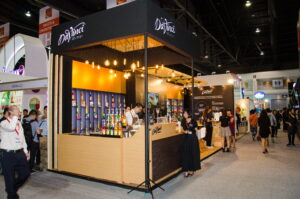
Picture yourself walking through a busy F&B trade show. You spot dozens of booths, but you only have a few seconds to decide where to stop. One booth catches your eye, another smells like fresh coffee, while a third has people gathering around a live demo.
That split-second decision matters. At SIGEP Asia 2026 at Marina Bay Sands, more than 13,000 trade visitors and 400 exhibitors and brands filled Halls A, B, and C. With that much competition, your F&B exhibition booth design needs to do more than look good. It needs to make buyers want to stop, taste, and talk.
Why Most F&B Booths Lose Buyers Before They Even Taste the Product
At an F&B trade show, you’re not only competing through signage. You’re competing through smell, sight, and movement.
A buyer may never discover how good your product tastes if your booth doesn’t give them a clear reason to stop. Your layout, lighting, product displays, and sampling area should work together to move people from the aisle to your counter.
Think of your booth as a sales tool, not just a display stand. Every design choice should make the next step easier.
Your Chilled Display Is Either Selling for You or Working Against You
Choose refrigeration early
Gelato, chilled desserts and dairy products need the right freezers and chillers from the start. Your equipment also needs to work with the venue’s power supply, safety rules and available space. Don’t leave these decisions until the final build stage.
Keep products visible
If buyers can’t see your products from the aisle, they have less reason to stop. Place chilled displays where visitors can spot the products before they reach your counter.
Plan for the full show
Your display needs to look good throughout the event, not only when you open on day one. Consider condensation, humidity, and heat from display lighting when planning your refrigeration and product placement.
A Live Demo Isn’t Decoration, It’s Your Best Sales Rep
Give buyers something to watch
An open bakery counter, barista station, or plating demo can create natural interest. People want to see how a product works, tastes, or comes together. That gives your team an easier opening for conversation than a static product table.
Protect your sightlines
A crowd around your demo can quickly block your sampling counter. Plan the demo zone so people can watch without stopping other visitors from reaching your team.
Plan for equipment
Espresso machines, tempering equipment and other demo tools can run for hours. Account for their power, heat, noise, and ventilation needs before construction starts. At Sands Expo, booth cooking requires venue approval, while approved cooking may also require the relevant SFA and SCDF permits and suitable exhaust arrangements.
The Sampling Counter Mistake That Costs You Serious Buyers
Make the queue easy to follow
A clear flow helps buyers move from approach to sampling without getting stuck. Counter height, entry points, and one-way movement can all reduce bottlenecks.
Plan hygiene into the design
Food sampling brings its own hygiene and venue requirements. Your team should confirm the rules with the organiser and venue before the build. Don’t treat compliance as something you can fix after installation.
Keep your brand in sight
When buyers focus on your sample, your branding should remain easy to spot. Use clear logo placement and simple messaging around the counter rather than covering every available surface.
Using the Show’s Energy Without Getting Lost in It
A nearby competition stage or feature zone can bring more people into your area. If you can catch that foot traffic without blocking the main route, the extra activity can work in your favour.
However, too much proximity can hurt. If your booth sits directly beside a loud stage, buyers may struggle to hear your team or focus on your demo. Use the show’s energy, but give your booth enough space to hold attention.
Why “Artisan” Has to Show, Not Just Get Said
If your brand sells artisan products, your booth should support that message.
Natural timber, warm lighting, and tactile finishes can give buyers a stronger sense of craft than generic retail fixtures. Your materials also send a message about your product quality before a buyer takes the first bite.
This matters even more when you’re looking for importers, distributors or other trade partners. Your booth forms part of their first impression of your business.
Matching Your Booth to Where Your Business Actually Is
Your booth doesn’t need to be large to make an impression.
New to Singapore or ASEAN? A compact, well-planned stand can give you strong visibility without building more space than you need.
Established F&B group? A larger pavilion-style build can help you present several products, brands or business divisions in one space.
Exhibiting with a distributor? Shared or modular builds can give several brands a consistent presence while keeping the setup practical.
What to Look for in a Booth Partner Before You Sign the Contract
Ask how early your builder needs to plan chilled displays, demo kitchens, power, and water access. These requirements can affect the whole booth layout, so they shouldn’t become last-minute problems.
Your exhibition booth partner should also understand the venue’s rules and coordinate around requirements such as power loads, food handling areas, and cooking approvals. Marina Bay Sands has specific requirements for booth cooking and food-related activities.
Finally, think beyond the show. If you participate in exhibitions regularly, ask your booth partner about storage options for your booth components and materials between events. At Gen Art Asia, we can help handle storage when needed, giving you a practical solution for keeping your booth elements safely managed between exhibitions.
A Booth Is a Sales Decision, Not a Design Decision
The exhibitors who generate the most interest aren’t always the ones with the biggest or most expensive booths. They make it easy for buyers to stop, understand the product, taste it, and start a conversation.
Your chilled display, demo zone, sampling counter, and finishes should all work as one system.
At Gen Art Asia, we can help you plan that system from the start, with exhibition booth design in Singapore, custom fabrication, display areas, printing, and installation. If you’re preparing for an F&B exhibition in Singapore, speak to a booth builder who understands the practical side of cold displays, demo areas and sampling flow before you lock in your design.
Planning your next exhibition booth? Talk to us to discuss your booth design and fabrication requirements.
FAQs
How much does a custom F&B exhibition booth cost in Singapore?
It depends on your booth size, materials, design, equipment, graphics and installation needs. Chillers, freezers and demo equipment can also affect the budget.
How far in advance should I book a booth if I need a chilled display or a demo kitchen?
Book as early as possible. Refrigeration, cooking equipment, power and ventilation can affect your design and require additional venue approvals.
Will a booth builder handle hygiene and food safety compliance for my sampling counter?
Your exhibition booth builder can design around your requirements, but you should confirm food safety and sampling rules with the organiser and venue. You may also need approvals or permits for certain activities.
What’s the difference between a shell scheme and a custom booth for F&B exhibitors?
A shell scheme gives you a standard structure with limited customisation. A custom booth lets you plan your layout, branding, product displays and demo areas around your sales goals.
Can I reuse my booth for future shows?
Yes. Modular elements, counters, graphics and display structures can often be adapted for future events. Discuss reuse and storage with your booth partner before fabrication.
What venue rules do I need to know before designing my booth at Marina Bay Sands or Sands Expo?
Check the organiser’s exhibitor manual and venue requirements early. Cooking, food sampling, power, fire safety, and other activities may require specific approval or arrangements.
