


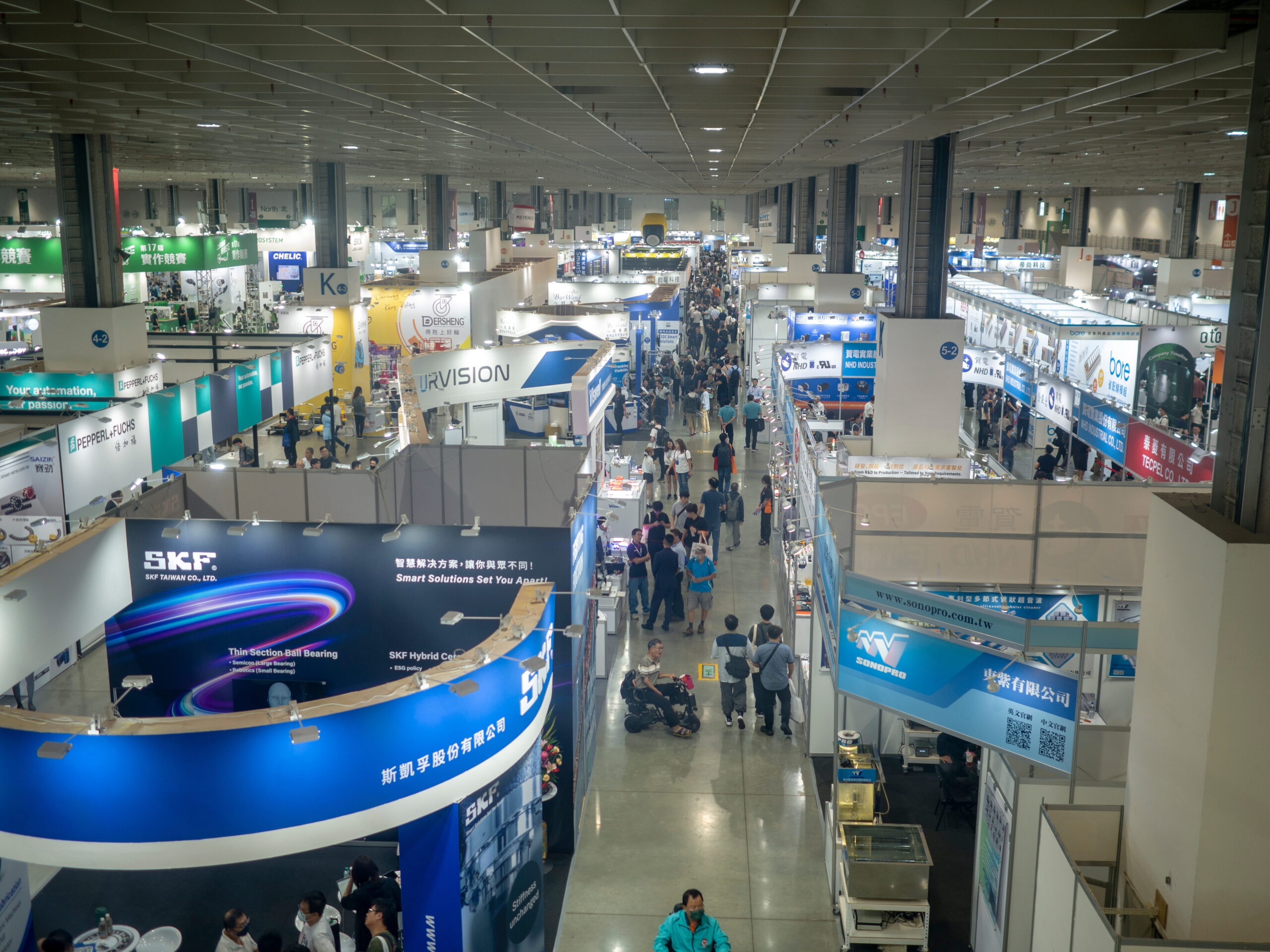
You’re walking between seminar rooms when a booth catches your eye. You give it a few seconds, decide whether you understand what the company does, then keep moving if you don’t.
That’s the reality at The Business Show Asia. The 2026 edition brought more than 8,000 attendees, 250 exhibitors and 150 expert speakers to Sands Expo & Convention Centre over two days, alongside speed networking and a packed programme of talks and masterclasses.
You already know how to build a two-minute business pitch. Your exhibition booth set-up needs the same discipline.
Why Your Booth Needs to Work Like a Pitch, Not a Display
A good pitch has a hook, a clear value proposition, a demonstration, and a close. Your booth faces the same challenge, except you have to deliver that message again and again to a new person every few minutes.
So don’t design your booth around what simply looks impressive. Give every part a job. Your signage should create the hook. Your main message should explain your value. Your demo should prove it. Your meeting area should make the next conversation easy.
The Hook: Getting Someone to Stop Walking
Your booth needs to work before your team says a word. Use height, contrast, and clear signage to make your brand easy to spot across a busy hall. Keep your main message high enough to see above people and simple enough to understand quickly.
An open entrance also helps. If visitors have to walk through a narrow opening or past a counter before they can speak to you, you’ve created an extra barrier.
Think about traffic peaks, too. Attendees often move between sessions in groups, so your booth needs to make an impact when that wave of traffic arrives.
The Value Proposition: What You Do in the Time It Takes to Read a Sign
If someone needs a full paragraph to understand what you offer, you’ve already lost valuable time. Reduce your main message to one clear idea. Avoid phrases like “innovative solutions” or “your trusted business partner” unless you explain what that actually means. With 250 exhibitors around you, generic business language quickly blends into the background.
A simple message hierarchy works better:
- Headline: What you do
- Subline: Who you help or what problem you solve
- Proof point: A result, feature, or reason to believe you
That gives visitors enough information to decide whether they should stop.
The Demo: Showing, Not Just Telling
If you’re selling SaaS, consulting tools, or digital services, let people see what your product can do. Build tablet kiosks, screens, QR-code touchpoints, and digital sign-in into the booth rather than adding them as an afterthought. Your lead capture should feel like part of the conversation, not another task your staff has to remember.
Place screens where visitors can see them without blocking your team. If a demo needs to run throughout the show, plan the power and connectivity properly for two full days.
The Close: Moving From Conversation to Commitment
Not every conversation needs a private meeting. Some do. A small meeting pod or semi-enclosed area gives serious prospects somewhere to sit when the discussion moves from a quick introduction to pricing, partnerships, or business needs.
Keep the front of your booth open and welcoming, then place the meeting area slightly further inside. Choose furniture that feels comfortable without taking up too much floor space, and consider simple acoustic solutions if you need more privacy.
The Follow-Up: What Happens After They Leave Your Booth
The conversation shouldn’t end when someone walks away.
Decide what you want each prospect to leave with. That might be a QR code, a scheduled call, a product guide, or a simple digital sign-up.
More importantly, connect that handoff to your lead-capture process. A two-minute conversation means little if your team can’t remember who the prospect was, what they wanted, or what should happen next.
Matching Your Pitch to Your Stage
Your booth size should match your business and what you need to achieve.
- Early-stage startup: Choose a compact stand with strong signage and one or two focused touchpoints. You don’t need a huge build to explain a good idea.
- Growing SaaS or service business: Add demo stations, screens, and space for active conversations. Your booth should let visitors experience your product, not just hear about it.
- Established SME or sponsor: A larger build can include meeting pods, stronger branding, and stage-adjacent visibility where the layout allows it.
Designing for Two Full Days, Not Just Opening Morning
Your booth needs to survive more than the opening rush. Choose durable materials and finishes that can handle continuous use. Give your team enough storage for brochures, bags, and personal items so the counter doesn’t become cluttered.
Staff comfort matters, too. If your team has nowhere to sit, store supplies, or take a short break, the quality of your conversations can drop by day two.
What to Look for in a Booth Partner Before You Sign the Contract
A services and entrepreneurship show needs a different approach from a product-heavy trade show. Your booth has to support conversations, demonstrations and meetings rather than simply display products.
Ask your builder about lead times, especially if you’re booking later in the cycle. Your budget will also affect the level of customisation, materials, lighting, screens and meeting areas you can include.
Check the organiser’s stand rules early, too. The 2026 Business Show Asia regulations cover matters such as venue access, lifting operations and safety requirements, while the exhibitor FAQs outline delivery and electrical arrangements.
Finally, ask how much of the build you can reuse. If you’ll return for another edition, a booth designed for adaptation can make more sense than starting from zero each time.
A Booth Is a Pitch You Give All Day Long
You already know how to build a two-minute pitch. Now apply that same thinking to the space around you.
Start with the hook. Make your value clear. Show what you can do. Give serious prospects somewhere to talk. Then make the follow-up simple.
At Gen Art Asia, we design and build exhibition booths around how you actually need to use them. If you’re exhibiting at Business Show Asia, let’s talk about how your booth can support the pitch your team has already spent time perfecting.
FAQs
How much does a custom booth cost for The Business Show Asia?
It depends on your booth size, materials, graphics, lighting, furniture, technology, and installation needs. A custom booth can also cost more if you need meeting areas or integrated screens.
How far in advance should I book my booth build?
As early as possible. Early planning gives you more time to finalise the design, confirm venue requirements, and arrange materials, graphics and equipment.
What’s the difference between a shell scheme and a custom booth for this kind of show?
A shell scheme gives you a standard exhibition structure with limited customisation. A custom booth lets you control the layout, branding, meeting areas, and visitor experience.
Do I really need a meeting pod, or is an open booth enough?
It depends on your sales process. If you regularly discuss pricing, partnerships, or sensitive business details, a small meeting area can make those conversations easier.
What makes booth design different for a speed-networking-format show versus a typical trade show?
Speed networking creates short, focused interactions. Your booth needs to communicate your value quickly and make it easy for visitors to move from a first introduction into a deeper conversation.
Do you offer storage for booth components between exhibitions?
If you participate in exhibitions regularly, storage can be a practical option between events. Gen Art Asia can help handle the storage of booth components and materials when required, so you have a convenient solution between exhibitions.
Picture yourself walking through a busy F&B trade show. You spot dozens of booths, but you only have a few seconds to decide where to stop. One booth catches your eye, another smells like fresh coffee, while a third has people gathering around a live demo.
That split-second decision matters. At SIGEP Asia 2026 at Marina Bay Sands, more than 13,000 trade visitors and 400 exhibitors and brands filled Halls A, B, and C. With that much competition, your F&B exhibition booth design needs to do more than look good. It needs to make buyers want to stop, taste, and talk.
Why Most F&B Booths Lose Buyers Before They Even Taste the Product
At an F&B trade show, you’re not only competing through signage. You’re competing through smell, sight, and movement.
A buyer may never discover how good your product tastes if your booth doesn’t give them a clear reason to stop. Your layout, lighting, product displays, and sampling area should work together to move people from the aisle to your counter.
Think of your booth as a sales tool, not just a display stand. Every design choice should make the next step easier.
Your Chilled Display Is Either Selling for You or Working Against You
Choose refrigeration early
Gelato, chilled desserts and dairy products need the right freezers and chillers from the start. Your equipment also needs to work with the venue’s power supply, safety rules and available space. Don’t leave these decisions until the final build stage.
Keep products visible
If buyers can’t see your products from the aisle, they have less reason to stop. Place chilled displays where visitors can spot the products before they reach your counter.
Plan for the full show
Your display needs to look good throughout the event, not only when you open on day one. Consider condensation, humidity, and heat from display lighting when planning your refrigeration and product placement.
A Live Demo Isn’t Decoration, It’s Your Best Sales Rep
Give buyers something to watch
An open bakery counter, barista station, or plating demo can create natural interest. People want to see how a product works, tastes, or comes together. That gives your team an easier opening for conversation than a static product table.
Protect your sightlines
A crowd around your demo can quickly block your sampling counter. Plan the demo zone so people can watch without stopping other visitors from reaching your team.
Plan for equipment
Espresso machines, tempering equipment and other demo tools can run for hours. Account for their power, heat, noise, and ventilation needs before construction starts. At Sands Expo, booth cooking requires venue approval, while approved cooking may also require the relevant SFA and SCDF permits and suitable exhaust arrangements.
The Sampling Counter Mistake That Costs You Serious Buyers
Make the queue easy to follow
A clear flow helps buyers move from approach to sampling without getting stuck. Counter height, entry points, and one-way movement can all reduce bottlenecks.
Plan hygiene into the design
Food sampling brings its own hygiene and venue requirements. Your team should confirm the rules with the organiser and venue before the build. Don’t treat compliance as something you can fix after installation.
Keep your brand in sight
When buyers focus on your sample, your branding should remain easy to spot. Use clear logo placement and simple messaging around the counter rather than covering every available surface.
Using the Show’s Energy Without Getting Lost in It
A nearby competition stage or feature zone can bring more people into your area. If you can catch that foot traffic without blocking the main route, the extra activity can work in your favour.
However, too much proximity can hurt. If your booth sits directly beside a loud stage, buyers may struggle to hear your team or focus on your demo. Use the show’s energy, but give your booth enough space to hold attention.
Why “Artisan” Has to Show, Not Just Get Said
If your brand sells artisan products, your booth should support that message.
Natural timber, warm lighting, and tactile finishes can give buyers a stronger sense of craft than generic retail fixtures. Your materials also send a message about your product quality before a buyer takes the first bite.
This matters even more when you’re looking for importers, distributors or other trade partners. Your booth forms part of their first impression of your business.
Matching Your Booth to Where Your Business Actually Is
Your booth doesn’t need to be large to make an impression.
New to Singapore or ASEAN? A compact, well-planned stand can give you strong visibility without building more space than you need.
Established F&B group? A larger pavilion-style build can help you present several products, brands or business divisions in one space.
Exhibiting with a distributor? Shared or modular builds can give several brands a consistent presence while keeping the setup practical.
What to Look for in a Booth Partner Before You Sign the Contract
Ask how early your builder needs to plan chilled displays, demo kitchens, power, and water access. These requirements can affect the whole booth layout, so they shouldn’t become last-minute problems.
Your exhibition booth partner should also understand the venue’s rules and coordinate around requirements such as power loads, food handling areas, and cooking approvals. Marina Bay Sands has specific requirements for booth cooking and food-related activities.
Finally, think beyond the show. If you participate in exhibitions regularly, ask your booth partner about storage options for your booth components and materials between events. At Gen Art Asia, we can help handle storage when needed, giving you a practical solution for keeping your booth elements safely managed between exhibitions.
A Booth Is a Sales Decision, Not a Design Decision
The exhibitors who generate the most interest aren’t always the ones with the biggest or most expensive booths. They make it easy for buyers to stop, understand the product, taste it, and start a conversation.
Your chilled display, demo zone, sampling counter, and finishes should all work as one system.
At Gen Art Asia, we can help you plan that system from the start, with exhibition booth design in Singapore, custom fabrication, display areas, printing, and installation. If you’re preparing for an F&B exhibition in Singapore, speak to a booth builder who understands the practical side of cold displays, demo areas and sampling flow before you lock in your design.
Planning your next exhibition booth? Talk to us to discuss your booth design and fabrication requirements.
FAQs
How much does a custom F&B exhibition booth cost in Singapore?
It depends on your booth size, materials, design, equipment, graphics and installation needs. Chillers, freezers and demo equipment can also affect the budget.
How far in advance should I book a booth if I need a chilled display or a demo kitchen?
Book as early as possible. Refrigeration, cooking equipment, power and ventilation can affect your design and require additional venue approvals.
Will a booth builder handle hygiene and food safety compliance for my sampling counter?
Your exhibition booth builder can design around your requirements, but you should confirm food safety and sampling rules with the organiser and venue. You may also need approvals or permits for certain activities.
What’s the difference between a shell scheme and a custom booth for F&B exhibitors?
A shell scheme gives you a standard structure with limited customisation. A custom booth lets you plan your layout, branding, product displays and demo areas around your sales goals.
Can I reuse my booth for future shows?
Yes. Modular elements, counters, graphics and display structures can often be adapted for future events. Discuss reuse and storage with your booth partner before fabrication.
What venue rules do I need to know before designing my booth at Marina Bay Sands or Sands Expo?
Check the organiser’s exhibitor manual and venue requirements early. Cooking, food sampling, power, fire safety, and other activities may require specific approval or arrangements.
At an invitation-only luxury trade show like ILTM Asia Pacific, every meeting is pre-arranged, and every buyer in the room has been vetted. You are not competing for foot traffic or shouting for attention amidst a sea of noise. The booth is the stage on which your brand performs. When your audience consists of high-net-worth (HNW) decision-makers, your exhibition environment functions as an immediate credibility signal. Brands that understand this elevate custom trade show booth design from a simple exercise in logistics to an intentional act of sensory positioning.
HNW Buyers Are Not Browsing. They Are Evaluating.
The Psychology of the Pre-Scheduled Appointment
Mass-market trade shows rely on magnetic design to pull passersby from the aisles. Appointment-based luxury events operate under an entirely different psychological reality: the booth validates rather than attracts. By the time a buyer takes a seat at your table, they already know your inventory, your price points, and your reputation. They are not asking who you are; they are evaluating whether your physical presence matches the promises made in your digital brochures. The environment either confirms their confidence or quietly undermines the premium you charge.
What Affluent Buyers Notice That Others Do Not
High-net-worth individuals and their representatives move through refined spaces daily, from five-star resort lobbies and private aviation lounges to bespoke retail spaces. They read physical quality instinctively. They notice a fractional gap in a joinery seam, a flickering overhead ballast, or the light weight of a cheap laminate counter. What registers as perfectly adequate to a general audience registers as sub-standard to this demographic. They feel quality through spatial proportions, tactile richness, and the deliberate absence of visual clutter.
Because every interaction in this setting carries immense commercial weight, you benefit immensely from working with an exhibition partner who understands how luxury buyers engage within these environments. This ensures your space supports deep, meaningful negotiations rather than superficial foot traffic.
Privacy Is a Design Feature, Not an Afterthought
Why Open-Plan Booths Fall Short at Invitation-Only Events
Open, expansive layouts work brilliantly when your goal is high throughput and casual conversation. At an elite travel showcase, however, exposed layouts expose your clients. They broadcast confidential deal terms to competitors, introduce acoustic chaos, and strip away the intimacy that luxury sales require. A high-net-worth buyer discussing exclusive villa buyouts or private jet itineraries will not strain their voice over floor noise, nor will they appreciate an audience.
Designing Conversation Zones into the Booth Structure
Leading luxury exhibitors use physical architecture to engineer psychological safety. Rather than building fortress-like walls that feel unwelcoming, incorporate partial timber slats, elevated acoustic counters, translucent fabric screens, and angled spatial orientations. These features form semi-private sanctuaries that feel exclusive yet accessible.
Achieving this balance between openness and confidentiality requires precise fabrication and spatial planning. Engaging skilled exhibition booth builders Singapore travel brands rely on ensures your design intent translates seamlessly into a structurally sound, highly functional layout.
Material Quality Communicates Before Anyone Speaks
The Gap Between Premium and Luxury in Exhibition Fabrication
Premium exhibition booth design is clean, functional, and attractive from five paces away. Luxury design, however, rewards the closest inspection. The difference lives in the tactile realm, the cold touch of real brushed brass versus gold-painted timber, the smooth grain of genuine hardwood edging versus exposed PVC tape, and the solid, dampened weight of a custom desk when a buyer leans on it.
|
Design Level |
Visual Finish |
Tactile Feel |
Structural Integrity |
|
Standard |
Vinyl graphics, exposed framing |
Lightweight, hollow surfaces |
Temporary, flexes under weight |
|
Premium |
Painted MDF, hidden fixings |
Clean, rigid, uniform |
Solid, clean joins |
|
Luxury |
Architectural veneers, real metals, integrated lighting |
Heavy, textured, cool to touch |
Built like permanent interior fit-outs |
Engineering Luxury Under Extreme Build Windows
Translating high-end interior architecture into a temporary trade show environment is a complex engineering challenge. Luxury hotel interiors take months to complete; exhibition teams are often given fewer than 30 hours on a chaotic venue floor.
This is where a seasoned customised events fabricator becomes critical. Rather than relying on standard off-the-shelf modular systems, specialised fabricators complete up to 95% of joinery, custom spraying, and structural fitting in off-site workshops. They engineer custom drop-in lock systems, pre-integrate electrical pathways into cabinetry, and conduct full workshop pre-assembly. On-site, the build transforms from messy construction into a clean, rapid precision assembly—ensuring flawless joinery, seamless corners, and zero dust or wet paint near delicate luxury fabrics.
How Material Choices Mirror the Product Being Sold
Imagine selling five-thousand-dollar-a-night private island suites while sitting behind a wobbly foamboard counter with raw edges. The cognitive dissonance destroys trust instantly. The physical elements of your booth act as a micro-sample of your actual hospitality product. When you select rich textiles, matte architectural finishes, and bespoke carpentry, you communicate that your brand delivers perfection at every touchpoint.
A one-stop exhibition partner helps maintain total consistency between initial design renderings, material sourcing, shop fabrication, and final site installation. This guarantees that the finished booth reflects the exact standards your brand promises.
Restraint Is the Most Expensive-Looking Choice
The Paradox of Luxury Branding in Exhibition Spaces
The default trade show instinct is additive: fill every square metre with high-contrast logos, feature lists, and dynamic screens. Luxury design demands subtractive discipline. Ample white space, minimal text, and a single, breathtaking hero visual project effortless confidence. When you overcrowd a space, you signal anxiety, a desperate need to justify your presence. Restraint signals authority.
Strategic Signage Versus Decorative Signage
Signage in a luxury environment must curate the atmosphere rather than scream for attention. Use crisp, high-resolution backdrop printing on non-reflective textiles to eliminate harsh glare from venue lights. Anchor your perimeter with immaculate large format printing mounted to hidden sub-frames, keeping visual seams invisible. Position your brand marks thoughtfully to frame photographable moments, keeping them understated rather than aggressive.
Coordinating graphics, soft signage, and heavy fabrication through a single vendor prevents mismatched colour profiles and awkward material transitions across different production suppliers.
Sensory Coherence: Designing the Atmosphere, Not Just the Space
Lighting as a Trust Signal
Standard venue lighting is brutal. It flattens textures, casts cast-iron shadows across faces, and strips warmth from spaces. Luxury exhibitors bypass ambient hall lighting entirely by building dedicated overhead rigging or integrated architectural lighting. Spotlights can vary between 3000K, 4000K, and 6000K to create the desired lighting effect, transforming a cold aluminium shell into an inviting boutique lounge.
Correct colour rendering (95 + CRI) makes natural timber, stone veneers, and upholstery fabrics look rich and authentic.
Texture, Scent, and Sound as Supporting Design Elements
True luxury design engages every sense in harmony:
- Tactile Grounding: Heavy-grade plush carpeting or textured woven vinyl floor coverings absorb acoustic reverberation and cushion feet, offering immediate physical relief from hard concrete aisles.
- Olfactory Anchoring: Diffuse subtle, custom ambient scents, notes of white tea, cedar, or bergamot, that subtly trigger emotional associations with world-class hotels.
- Acoustic Softening: Use fabric-wrapped acoustic wall panels to absorb ambient floor noise, allowing private conversations to occur at a comfortable, natural speaking volume.
Managing these overlapping sensory layers requires seamless coordination across multiple production elements. Working with a holistic exhibition partner ensures these subtle details operate in complete harmony.
Spatial Pacing and the Seated Conversation
Designing for One-to-One, Not One-to-Many
Most trade show booths feature standing counters and quick-touch display pedestals designed for high throughput. Appointment-based luxury shows require a completely different spatial layout centred around extended, comfortable sit-down meetings.
Select low-slung, ergonomic lounge chairs over rigid barstools. Set coffee table heights precisely to allow easy note-taking and tablet viewing without forcing guests to hunch over. Keep brand literature neatly concealed within built-in, touch-latch joinery so clutter never disrupts the aesthetic balance during high-value negotiations.
How Space Allocation Signals Exclusivity
Generous, uncluttered spacing communicates power. When you dedicate forty per cent of your floor plan to open architectural movement rather than squeezing in an extra meeting table, you tell the buyer that you value quality over volume. Fewer, beautifully proportioned meeting zones signal that access to your brand is exclusive, selective, and highly prized.
Translating Buyer Psychology into Your Exhibition Brief
Starting the Brief with the Buyer, Not the Floor Plan
Avoid starting your fabrication brief with floor dimensions and socket counts. Begin with the human experience:
- Who is sitting across from your team?
- What high-end environments do they inhabit daily?
- What subtle environmental cues will immediately put them at ease?
- What visual details might undermine your brand’s authority?
The Value of Early Fabricator Involvement: Sourcing & Prototyping
Digital 3D renderings can easily hide structural flaws or overestimate how materials look under harsh venue lighting. Engaging a seasoned custom fabricator during the early design phase, rather than after handing over a finished render, bridges the gap between creative vision and real-world execution.
An experienced fabricator brings essential technical capabilities to the creative process:
- Material Prototyping & Physical Sample Boards: Providing real-world tactile samples—from fire-rated acoustic drapery to low-sheen metallic laminates—to ensure materials look and feel premium under venue lighting.
- 1:1 Mock-Ups of Critical Joinery: Building physical prototypes of complex bespoke elements, such as integrated lighting alcoves or hidden storage doors, to test fit and function before full production.
- Venue Compliance & Load Risk Mitigation: Navigating strict regional venue codes (such as Singapore’s structural load limits, complex ceiling rigging approvals, and fire safety certifications) seamlessly to prevent last-minute structural rejections or costly on-site modifications.
What to Communicate to Your Exhibition Builder
Translate these psychological requirements into concrete, technical design specifications:
- Specify Tactile Qualities: Don’t just pick colours, specify matte finishes, soft-touch laminates, brushed metals, and low-sheen fabrics that eliminate harsh glare.
- Define Acoustic Expectations: Request acoustic insulation within partition walls to dampen ambient show floor noise.
- Detail Edge Profiles: Require solid timber or metal edge-banding on all touchpoints to prevent exposed seams or sharp laminate edges.
- Plan Cable Integration: Mandate fully concealed wireways for power banks, lighting fixtures, and media screens to eliminate visible cords.
Partnering with an experienced, end-to-end exhibition builder streamlines this technical translation process, ensuring your creative vision turns into a flawless physical structure on the show floor.
Conclusion
At high-stakes luxury showcases, your exhibition environment is never a passive backdrop to the business; it is an active component of your sales strategy. High-net-worth buyers evaluate your brand long before your sales directors speak a word. Every material choice, every lighting cue, and every spatial boundary either builds or erodes the trust required to close high-value business.
Achieving this level of precision requires moving beyond traditional vendor-client relationships. When you collaborate with a seasoned customised events fabricator as a strategic production partner, complex structural engineering, raw material sourcing, and tight venue logistics are handled with quiet expertise. This allows your brand leadership to focus entirely on hosting high-value conversations rather than troubleshooting floor logistics.
By combining an understanding of buyer psychology with bespoke custom trade show booth design, luxury brands create immersive spaces that feel authentic, exclusive, and commanding. Partnering with a skilled, one-stop exhibition booth company ensures that every detail of your layout, from structural framing to final surface finishes, expresses the same uncompromising excellence as your core brand experience. As the luxury travel market expands across Asia Pacific, your physical presence must evolve to match the expectations of the world’s most discerning buyers.
Ready to create an exhibition space that reflects your luxury brand? Contact Gen Art Asia to discuss your custom trade show booth design.

Choosing the right booth setup can significantly impact your exhibition results. Whether you are participating in a major trade show, a corporate conference, or a business expo in Singapore, your booth directly affects how visitors perceive your brand. It heavily influences how they interact with your products and how well they remember your business long after the event has concluded.
This is where understanding the difference between a shell scheme booth and a custom exhibition booth becomes critically important. A basic shell scheme booth may help you show up at an event , but a custom booth ensures your brand stands out and actively attracts visitors.
With professional custom booth fabrication, businesses can build a tailored space entirely around their brand identity, product requirements, target audience, and specific event goals. This creates a vastly more polished, premium, and memorable presence compared to a standard, off-the-shelf booth setup.
What Is a Shell Scheme Booth?
A shell scheme booth is a standard, modular exhibition booth structure provided directly by the event organisers. These packages are commonly used at trade shows and exhibitions across Singapore as a ready-made, entry-level setup for exhibitors.
However, because the structure is completely fixed, businesses have very limited control over the layout, height, construction materials, finishes, and overall brand presentation. It typically serves as a basic blank box within a row of identical boxes.
What Is a Custom Exhibition Booth?
A custom exhibition booth is a fully tailored environment designed and fabricated entirely according to a brand’s specific marketing objectives, product dimensions, and exhibition strategy.
Unlike modular shell schemes, custom booths are built completely from scratch to create unique, immersive brand experiences. This freedom means the entire footprint can be planned around how visitors move through the space, where products are best displayed, how your sales staff interact with prospects, and how your brand should be experienced on-site.
Custom booth creation grants businesses absolute control over the structure, layout, carpentry detailing, lighting design, display features, and overall finishing. This ensures the booth looks highly intentional, premium, and unforgettable.
For brands competing in high-traffic exhibitions, this approach directly drives stronger footfall, deeper visitor engagement, and higher-quality leads.
Key Differences Between Shell Scheme & Custom Exhibition Booths
1. Design Flexibility
Shell scheme booths strictly follow standard, uniform layouts, whereas custom booths allow for completely tailored structures and bespoke spatial planning.
This architectural flexibility allows brands to build out stunning feature walls, dedicated product zones, custom reception counters, private meeting areas, and interactive experiential sections that align perfectly with their event goals.
2. Branding Opportunities
A standard shell scheme booth typically offers only basic branding via flat printed graphics and a standard text fascia board signage. Conversely, custom fabrication builds a powerful brand identity through personalized carpentry, dimensional graphics, structural feature walls, and integrated lighting design.
With a custom booth, your brand is never limited to a simple logo on a wall panel —the entire physical structure carries your brand identity through its materials, colours, layout, and premium finishing.
3. Setup & Installation
Shell schemes rely on pre-existing modular systems that allow for incredibly fast installation by the organizer’s crew. Custom booths involve meticulous off-site fabrication followed by a highly coordinated, professional installation process on the venue floor.
While custom setups require more upfront planning, the final result is completely controlled. Every structure, product display, custom light fixture, and branded element is precisely prepared to ensure an immaculate final presentation.
4. Reusability & Scalability
Many modern custom exhibition booths are intentionally designed to be modular and reusable across multiple events. This allows businesses to maximise their long-term marketing value.
Reusable custom booth structures can be easily adapted, reconfigured, or scaled to fit different footprint sizes, venue formats, and campaign needs down the line. This effectively solves long-term budget concerns while continuously giving the brand a premium market presence.
For businesses joining several exhibitions each year, modular custom fabrication is a significantly smarter investment than repeatedly paying for basic setups that lack brand impact.
Cost Comparison: Shell Scheme Booth vs Custom Exhibition Booth
Exhibition booth costs in Singapore vary significantly based on the booth type, level of structural customisation, materials selected, and any integrated technology requirements.
While shell scheme booths are generally more affordable upfront for smaller events, custom exhibition booths offer vastly superior branding flexibility and long-term asset value.
The critical difference lies in how your marketing capital works for your brand. A shell scheme payment is a short-term, one-off event expense that disappears when the show ends.
A custom booth, however, can become a reusable brand asset that continuously attracts premium traffic, supports deeper client conversations, and generates superior leads across multiple exhibitions.
| Comparison Factor | Shell Scheme Booth | Custom Exhibition Booth |
|---|---|---|
| Estimated Cost Range in Singapore | Approximately SGD 800 to SGD 3,000 | Approximately SGD 2,000 to SGD 25,000+ |
| Booth Structure | Standard modular setup provided by organisers | Fully customised booth fabrication |
| Design Flexibility | Limited customisation | Fully tailored layouts and structures |
| Branding Opportunities | Basic branding and graphics | Strong brand visibility and immersive experiences |
| Included Features | Basic wall panels, lighting, carpet flooring, fascia signage, power points | Custom carpentry, feature walls, lighting, graphics, digital integration |
| Additional Costs | Graphics, furniture rental, lighting upgrades, display accessories | Technology integration, premium materials, installation, dismantling, logistics |
| Setup Time | Faster installation | Longer planning and fabrication timeline |
| Visitor Engagement Potential | Moderate | High |
| Technology Integration | Limited support for interactive features | Supports LED displays, touchscreens, VR, AR, and immersive experiences |
| Reusability | Limited | Many custom booths can be modular and reusable |
Although custom exhibition booths require a higher upfront investment, they consistently deliver profound brand differentiation, significantly improved visitor engagement, and much higher long-term exhibition value.
Businesses must carefully weigh their exhibition goals, target audience demographics, and core branding strategy before deciding which option fits best. If your only goal is to occupy a physical coordinate on the floor, a shell scheme may suffice.
But if your goal is to stand out, draw massive crowds, foster high-value business conversations, and build lasting brand recall, a custom booth offers unparalleled value.
How Custom Exhibition Booth Fabrication Creates Better Brand Experiences
Strategic Space Planning and Booth Layouts
Custom booth layouts improve visitor flow by creating:
- Functional engagement zones
- Clear movement pathways
- Comfortable interaction spaces
- Product display areas
- Meeting corners
- Staff support zones
This deliberate architecture prevents overcrowding and elevates the overall visitor experience.
Superior space planning ensures businesses maximize the utility of every single square metre. Instead of forcing your team’s activities into a rigid, pre-built shell scheme box, the entire footprint is crafted around exactly how your brand needs to sell, present, and engage.
Custom Carpentry and Structural Fabrication
Custom fabrication supports:
- Branded feature walls
- Product display counters
- Premium finishes
- Unique architectural elements
- Built-in storage
- Digital display structures
- Reception counters and discussion areas
These flawless details make the booth a functional workspace while ensuring it stands out visually.
Custom carpentry allows displays, counters, shelves, and signage to be beautifully built into the booth architecture neatly , creating a clean look and an effortless experience for both staff and visitors.
For Gen Art, carpentry is never just about building individual components. It is about creating a physical brand environment that looks commanding, works flawlessly, and achieves your event objectives.
Built for Brand Impact: Why Gen Art Creates Custom Booths That Work
Custom exhibition booths offer a vastly superior path for brands that demand serious market impact. They grant businesses the freedom to build unique architecture, standout branded elements, premium material finishes, integrated technology, and layouts optimized exclusively around visitor engagement.
As experienced events and exhibition carpentry experts in Singapore, Gen Art helps businesses move far beyond generic, uninspired booth setups. The Gen Art team creates custom exhibition booths engineered to maximize visibility, attract heavy foot traffic, support deep client engagement, and strengthen long-term brand recall.
Whether you require a fully customized turn-key booth, tailored branding carpentry elements, integrated digital displays, or a highly versatile reusable modular structure, Gen Art brings your unique exhibition concept to life with absolute precision and purpose.
FAQs About Exhibition Booths & Shell Scheme Booths
1. What is the difference between a shell scheme booth and a custom exhibition booth?
A shell scheme booth is a uniform, modular package provided directly by event organizers. A custom exhibition booth is built entirely from scratch and tailored to a brand’s unique marketing goals, spatial requirements, and aesthetic identity.
2. Which is cheaper: shell scheme or custom exhibition booth?
Shell scheme booths are generally cheaper upfront because they include basic structures and setup provided by organisers.
3. Are shell scheme booths good for first-time exhibitors?
Shell scheme booths are cheaper upfront because they consist of basic, pre-fabricated modular walls and standard amenities supplied in bulk by the organizers. Custom booths offer much better long-term financial value through reusability and significantly higher ROI.
4. Can a shell scheme booth be customised?
Yes, it can be customized using printed foam boards, pop-up banners, and rented furniture, but the customization options are extremely rigid and limited compared to a fully custom-built booth.
5. Which booth type attracts more visitors?
Custom exhibition booths attract significantly more visitors. Their unique architecture, commanding height potential, premium finishes, and interactive capabilities make them stand out effortlessly against a sea of identical shell schemes.
6. How much does a custom exhibition booth cost in Singapore?
In Singapore, custom booths typically range from SGD 2,000 to SGD 25,000 or more. The final cost depends heavily on the overall footprint size, material selections, structural complexity, and integrated technology components. Highly premium booths featuring custom carpentry and advanced interactive displays can cost significantly more.
7. Are custom exhibition booths reusable?
Yes, absolutely. When partnering with an expert builder like Gen Art, booths can be cleverly engineered as modular units, allowing them to be safely dismantled, stored, and reconfigured for multiple exhibitions or different space dimensions.
8. Which booth option is better for lead generation?
Custom exhibition booths are vastly superior for lead generation. Their flexible layouts allow for the intentional placement of interactive kiosks, private discussion areas, and engaging activation zones that naturally draw people in and facilitate data capture.
9. Can small businesses benefit from custom exhibition booths?
Yes, small businesses can benefit immensely. A compact, cleverly designed custom booth maximizes brand presence and visitor engagement within a smaller footprint, making a small business look exceptionally premium and well-established.

Exhibitions in Singapore are becoming increasingly experience-driven.
Brands can no longer rely solely on basic banners, standard brochures, or static product displays to make an impact. At today’s trade shows, companies face intense competition for attention in crowded halls , where visitors walk past hundreds of booths within a very short time.
Interactive features have become essential for helping brands stand out. From touchscreen displays and LED walls to immersive VR experiences and gamified activities, an interactive exhibition booth can naturally attract visitors and create deeper engagement.
However, technology alone does not guarantee a successful setup. A screen placed on a basic stand often looks temporary , a VR station without proper space planning can feel awkward , and an LED wall lacking structural support can appear unsafe or unfinished. This is why custom exhibition booth fabrication is essential. The physical booth must be designed and built specifically around the technology. With the right carpentry, structural layout, and professional finishing, interactive features can look seamless, premium, and purposeful.
In this article, we explore how interactive technology is transforming exhibition booths and why custom booth fabrication plays a key role in ensuring these technologies are effective.
What Is Interactive Technology in Exhibition Booths?
Interactive technology in exhibition booths refers to the digital tools and immersive features that actively encourage visitor participation. Instead of simply looking at static displays , visitors can touch, explore, play, scan, or experience the brand in a dynamic way.
Common interactive exhibition technologies include:
- Touchscreen product catalogues
- Interactive games and quizzes
- Augmented reality demonstrations
- Virtual reality simulations
- Motion-activated displays
- Digital lead capture systems
- LED video walls and immersive screens
These features make exhibitions more dynamic and memorable.
While these features make exhibitions more dynamic and memorable , they must be properly integrated into the space. A premium interactive booth needs more than just devices. It requires custom-built structures, concealed wiring, safe installation, clear visitor flow, and branded finishing. Through tailored exhibition booth design and fabrication, every interactive touchpoint feels like a natural part of the overall brand experience , which significantly improves how visitors perceive and engage with the brand.
The Role of Custom Booth Fabrication in Interactive Experiences
Technology alone does not create a successful booth experience; the physical structure must be carefully designed to support visitor interaction and movement.
Custom exhibition booth fabrication allows businesses to:
- Integrate digital displays seamlessly into booth structures.
- Create dedicated interaction zones for visitors.
- Improve overall visitor flow and accessibility.
- Conceal wiring, media players, and technical components.
- Support large, heavy digital installations safely.
When technology integration is planned during the fabrication stage, the final booth feels cohesive and polished. Screens do not look like afterthought add-ons ; kiosks look built-in , VR zones feel safe and intentional , and LED walls become an integrated part of the booth architecture.
Ultimately, this protects your investment. Interactive exhibition technology can be costly , and custom booth creation ensures that each feature is presented beautifully, works smoothly, and delivers a stronger return on investment (ROI).
Why Interactive Exhibition Booths Are Growing in Popularity
Interactive exhibition booths are becoming the industry standard because visitor expectations continue to evolve.
Several factors are driving this shift:
- Shorter visitor attention spans
- Growing demand for immersive brand experiences
- Increased influence of social media sharing
- Higher expectations at trade shows and exhibitions in Singapore
However, interactive features only work well when the booth layout supports them. Visitors need ample space to move , screens must be placed at ergonomic heights , and demo areas must feel open and accessible.
Custom exhibition booth fabrication builds this strategic environment, turning standalone devices into a smooth, structured visitor journey.
Benefits of Interactive Technology in Exhibition Booths
Attracts More Foot Traffic
Interactive features naturally draw attention in busy exhibition halls.
Moving visuals, touchscreen stations, and immersive displays encourage passing visitors to stop and take a closer look. However, the actual visual impact depends heavily on how the booth is built – a large screen needs proper framing , a digital feature wall needs robust support , and an interactive station requires strategic structural placement.
How Custom Fabrication Enhances Visual Impact
Custom booth fabrication helps maximise visual appeal through:
- Strategic feature walls
- Open-concept booth layouts
- Integrated LED displays
- Eye-catching digital touchpoints
- Branded structures around screens and kiosks
- Clean carpentry finishes
By designing the technology into the structure from day one, it becomes an organic part of the environment, creating a powerful first impression and a premium exhibition presence.
Increases Visitor Engagement
Interactive exhibition booths keep visitors engaged for longer periods.
Well-designed booth layouts support participation by including:
- Dedicated demo counters
- Product interaction zones
- Comfortable viewing spaces
- Clear visitor pathways
Custom carpentry ensures these areas feel natural and gives every activity a clear place within the space. This makes the visitor journey effortless, encouraging longer dwell times that lead to stronger brand recall and more meaningful conversations with your team.
Improves Lead Generation
Interactive exhibition booths can significantly improve lead collection and customer data gathering.
Popular lead generation features include:
- Interactive registration stations
- Digital surveys and quizzes
- Gamified competitions
- QR code engagement systems
- Touchscreen enquiry forms
Custom booth fabrication helps position these touchpoints logically within the layout, ensuring a smoother visitor journey and higher-quality lead capture.
Enhances Brand Experience
Technology allows businesses to build highly immersive and memorable brand stories. Custom-built environments reflect brand identity through coordinated lighting effects, immersive digital storytelling , interactive product demonstrations , multi-sensory experiences, branded wall panels , and custom counters.
The physical booth must match the quality of the digital execution. If the carpentry looks basic, the entire brand experience can feel less premium. When the booth is impeccably built, the technology looks far more impressive and aligned with your brand.
This is where Gen Art’s custom booth carpentry adds immense value, helping businesses create branded environments that beautifully support both technology and visitor engagement.
Popular Interactive Technologies Integrated Into Custom Exhibition Booths
Touchscreen Displays & Interactive Kiosks
Touchscreen displays allow visitors to browse product catalogues, explore services, and access information independently.
How Booth Fabrication Supports Digital Touchpoints
Fabrication helps integrate these technologies through:
- Built-in kiosk structures
- Concealed cable management
- Ergonomic screen placement
- Premium branding finishes
This creates a clean, uncluttered, and highly professional presentation.
AR (Augmented Reality) Experiences
Augmented reality allows visitors to interact with digital elements layered onto physical spaces.
AR can be used for:
- Product visualisation
- Interactive storytelling
- Virtual demonstrations
- Brand activations
Custom booth fabrication supports AR experiences by creating controlled viewing environments and clearly structured interaction zones.
VR (Virtual Reality) Booth Experiences
Virtual reality creates highly immersive brand interaction journeys that transport visitors entirely into simulated environments.
Fabricating Dedicated VR Areas
Successful VR zones require:
- Safe movement space
- Acoustic considerations
- Controlled lighting
- Structural planning for equipment
Dedicated VR spaces significantly improve visitor comfort and immersion.
LED Video Walls & Immersive Displays
Large digital displays remain one of the most powerful ways to command attention across an exhibition hall.
Integrating Large Displays Into Booth Structures
Custom fabrication supports these installations through:
- Structural reinforcement
- Feature wall framing
- Integrated lighting design
- Coordinated visual layouts
These elements work together to build high-impact focal points that elevate brand visibility.
How Custom Booth Fabrication Enhances Interactive Experience
Digital installations require specialised support structures. Screens, lighting systems, kiosks, AV equipment, and interactive displays must be installed safely and securely.
Custom exhibition booth creation ensures these elements are properly supported structurally , reducing the risk of unstable fixtures, awkward screen placements, and last-minute technical issues on-site.
For businesses investing in premium event technology, professional fabrication protects your hardware equipment and guarantees a flawless visitor brand interaction journey.
Key Considerations for Interactive Exhibition Booth Fabrication
Not every booth requires cutting-edge, complex technology.
The best interactive features are those that directly support clear business goals.
Businesses should prioritise features that align with:
- Brand objectives
- Visitor demographics
- Product showcases
- Sales goals
- Budget considerations
- Available booth space
The goal should always be meaningful engagement, not technology for the sake of it. A customised booth carpentry partner like Gen Art can help brands decide exactly which technologies fit the physical space, target audience, and event goals, preventing clutter and keeping the booth highly focused.
Future Trends in Interactive Exhibition Booths
Several key trends are actively shaping the future of exhibitions:
- AI-powered personalisation
- Hybrid physical and digital booths
- Sustainable digital displays
- Holographic presentations
- Contactless interactive solutions
- Data-driven visitor engagement tools
As technology continues to evolve, exhibition booths will become more immersive and performance-focused. However, the foundational need for strong booth fabrication will remain. The more advanced the technology becomes, the more vital it is to have custom structures that support, protect, and present it effectively.
Businesses that invest equally in interactive technologies and quality custom fabrication will be best positioned to attract attention, drive engagement, and achieve outstanding event results.
Built for Impact: How Gen Art Brings Interactive Booths to Life
Interactive technology is fundamentally changing how businesses engage visitors at trade shows and exhibitions.
Modern exhibition booths are no longer just display spaces—they are immersive environments built to attract attention, encourage participation, and strengthen on-site engagement.
But technology performs at its best when the booth is meticulously designed around it. Every interactive feature needs thoughtful carpentry and fabrication to look polished, function flawlessly, and reflect the quality of your brand.
This is where Gen Art adds value.
As an experienced exhibition booth builder and events carpentry specialist in Singapore, Gen Art helps businesses turn interactive booth concepts into polished, practical, and high-impact exhibition spaces.
From custom structures and seamless digital display integration to on-site installation and premium finishing, Gen Art builds booths that help your brand stand out with complete confidence.
Get in touch with Gen Art today to discuss your booth requirements and request a customised proposal for your next exhibition or trade show.
FAQs About Interactive Exhibition Booths
1. Why are interactive features important for modern exhibition booths?
Interactive technology helps businesses attract attention in crowded halls, increase active visitor engagement, improve long-term brand recall, and generate higher-quality leads during exhibitions.
2. What are the most popular interactive booth technologies today?
Popular technologies include touchscreen kiosks, high-definition LED video walls, virtual reality (VR) setups, augmented reality (AR) displays, and gamified digital engagement systems.
3. How does custom booth fabrication support interactive technologies integration?
Custom booth fabrication provides the necessary structural support for heavy gear, meticulous spatial planning, concealed wiring, and seamless architectural integration for digital installations.
4. Are interactive exhibition booths expensive to build?
Costs vary depending on the specific technology used, the booth size, and the level of structural customisation. Businesses can easily scale interactive features up or down based on their exhibition goals and budget.
5. Can small exhibition booths integrate interactive features effectively?
Yes, absolutely. Even smaller booths can effectively incorporate streamlined touchscreen displays, digital lead capture systems, and compact interactive experiences to significantly boost engagement.
6. What should businesses consider before integrating technology into their exhibition booth?
Businesses should carefully evaluate the intended visitor interaction flow, clear booth objectives, technical and power requirements, available floor space, overall budget, and the reliability of their fabrication and installation partner.

In today’s visually driven marketplace, attention is currency. Across Singapore’s retail streets, corporate spaces, exhibitions, and events, brands are constantly competing to be seen, remembered, and recognised. Visual impact is no longer optional—it’s essential.
Large format digital solvent printing offers businesses a powerful way to communicate bold messages at scale. From banners and wall murals to signage, POP displays, and vehicle wraps, this printing solution allows brands to create high-impact visuals that capture attention and reinforce identity across multiple environments.
What Is Large Format Digital Solvent Printing?
Large format digital solvent printing uses solvent-based inks designed to bond deeply with printing materials, producing vibrant colours and long-lasting results. Unlike standard printing methods, solvent inks are highly resistant to fading, moisture, and environmental wear.
Why Solvent Printing Stands Out
- Produces sharp, high-resolution images
- Delivers rich colour depth and contrast
- Suitable for both indoor and outdoor applications
- Offers excellent durability for long-term use
Compared to short-term inkjet or water-based printing, solvent printing provides a stronger balance of quality, cost-efficiency, and longevity, making it ideal for businesses that require reliable visual performance.
Applications for Businesses
Large format digital printing supports a wide range of commercial and promotional uses.
Banners and Posters
Large-scale banners and posters are effective tools for promotions, exhibitions, roadshows, and events. Their size and clarity make them ideal for grabbing attention from a distance.
Wall Murals and Decorative Graphics
Custom wall murals transform retail stores, offices, showrooms, and event venues into branded environments. These prints help enhance ambience while reinforcing brand identity through immersive visuals.
POP Displays and Exhibition Graphics
Point-of-purchase displays, exhibition panels, and backdrop graphics help brands communicate messages clearly in high-traffic environments. Large format prints play a key role in booth design and event storytelling.
Vehicle Wraps and Outdoor Signage
Vehicle wraps and exterior signage turn everyday surfaces into moving or permanent advertisements. With solvent printing, visuals remain vibrant even when exposed to weather and sunlight.
Benefits of Large Format Digital Printing
Investing in large format printing delivers both creative and commercial advantages.
Key Benefits
- High visual impact: Crisp details and bold colours command attention
- Weather resistance: Suitable for outdoor use without rapid fading
- Custom sizes: Prints tailored to walls, windows, vehicles, and structures
- Fast turnaround: Ideal for time-sensitive marketing campaigns
- Consistent branding: Ensures visual continuity across multiple touchpoints
These benefits make large format printing a versatile solution for both short-term promotions and long-term branding.
Design and Production Considerations
To maximise results, careful planning is essential before going to print.
Important Factors to Address
- Resolution: High-resolution artwork ensures sharp visuals at large scales
- File format: Correct formats prevent distortion or colour loss
- Colour accuracy: Proper calibration ensures brand colours remain consistent
- Material selection:
- Vinyl for signage and wraps
- PVC for rigid displays
- Canvas for decorative or artistic applications
- Mesh for outdoor banners exposed to wind
- Vinyl for signage and wraps
- Scale and placement: Viewing distance and lighting affect readability and impact
Collaborating with professional printing providers ensures these technical details are handled correctly, avoiding costly errors or reprints.
Partnering with a Professional Printing Service in Singapore
Working with an experienced large format printing services provider offers more than just printing—it delivers peace of mind.
Why Professional Expertise Matters
- End-to-end support from design checks to final installation
- Access to industry-grade printing equipment
- Consistent quality across large-scale projects
- Expertise in handling complex installations and timelines
Businesses across retail, corporate, and events sectors rely on large format digital printing to enhance visibility, attract customers, and strengthen brand presence in competitive environments.
Conclusion
Large format digital solvent printing is a powerful tool for businesses looking to elevate brand visibility in Singapore. With its ability to produce vibrant, durable, and custom-sized visuals, it supports a wide range of marketing, retail, and event applications.
When executed professionally, large format printing transforms spaces, captures attention, and reinforces brand identity—making it a valuable investment for any business.
Looking to create high-impact visuals for your next campaign or event?
Consult Gen Art Asia for customised large format digital printing solutions, from production to installation.

In Singapore’s fast-paced and highly competitive business environment, brand visibility is everything. From bustling retail streets and corporate districts to exhibitions, events, and commercial spaces, businesses are constantly competing for attention. To stand out, brands need more than just a logo—they need a strong, consistent, and memorable visual presence.
Custom signage solutions play a critical role in shaping how a brand is seen, remembered, and trusted. Whether it’s a striking shopfront sign, an illuminated lightbox, event signage, or digital displays, professionally designed signage helps businesses communicate clearly, attract customers, and leave a lasting impression.
The Role of Custom Signage in Branding
Custom signage is one of the most powerful physical touchpoints between a brand and its audience. It reinforces identity and strengthens recognition every time someone sees it.
How Signage Builds Brand Strength
- Maintains consistency in brand colours, fonts, and messaging
- Reinforces professionalism and credibility
- Increases brand recall through repeated visual exposure
- Communicates brand personality—modern, premium, bold, or minimal
Well-executed signage signals trust and reliability, helping customers feel confident engaging with your business. From corporate offices to retail outlets and exhibitions, signage acts as a silent brand ambassador.
Types of Custom Signage Solutions
Businesses in Singapore rely on a wide range of signage solutions, each serving different purposes and environments.
Outdoor Signage
Outdoor signage is often the first interaction customers have with a brand.
Common Applications
- Shopfront signs
- Lightboxes and illuminated logos
- Banners and billboards
- Wayfinding and building signage
Outdoor signage boosts visibility, attracts foot traffic, and strengthens street-level brand presence—especially in high-traffic areas.
Indoor Signage
Indoor signage enhances the customer experience while reinforcing brand identity.
Common Applications
- Lobby and reception signage
- Directional and wayfinding signs
- Feature walls and branded panels
- Acrylic, metal, or 3D logo displays
Effective indoor signage helps guide visitors while creating a polished, professional environment.
Event and Exhibition Signage
Event-focused signage is designed to attract attention quickly and communicate messages clearly.
Common Applications
- Exhibition panels and backdrops
- Pop-up displays and standees
- Custom lightboxes
- Promotional graphics and wall wraps
At exhibitions and trade shows, impactful signage plays a key role in drawing visitors to your booth and enhancing brand recall.
Digital Signage
Digital signage adds motion, flexibility, and interactivity to branding efforts.
Common Applications
- LED screens and video walls
- Interactive touch displays
- Motion graphics and animated branding
- Real-time promotional content
Digital signage allows brands to update content easily, making it ideal for promotions, announcements, and dynamic storytelling.
Benefits of Professional Custom Signage
Working with professional signage providers ensures quality, durability, and effectiveness.
Key Advantages
- Increased visibility: Eye-catching designs attract attention and foot traffic
- Stronger brand image: Professional signage elevates perceived brand value
- Marketing support: Reinforces campaigns, launches, and promotions
- Long-term durability: High-quality materials ensure signage lasts
- Tailored solutions: Custom-built to fit specific business goals and spaces
Effective signage doesn’t just look good—it actively supports sales, engagement, and brand growth.
Design and Installation Considerations
Successful signage is a balance of design, functionality, and technical execution.
Key Factors to Consider
- Materials: Acrylic, metal, wood, PVC, or LED-based solutions
- Colour & typography: Must align with brand guidelines and visibility needs
- Placement: Strategic positioning maximizes visibility and impact
- Lighting: Enhances readability and creates visual interest
- Safety & compliance: Adheres to local regulations and venue requirements
Professional designers and installers ensure signage is structurally safe, visually consistent, and executed to high standards—avoiding costly mistakes or rework.
Case Examples / Success Stories
Across Singapore, businesses that invest in custom signage consistently see measurable benefits.
Common Results
- Increased foot traffic and brand visibility
- Stronger brand recall at exhibitions and retail spaces
- Higher engagement through illuminated and digital signage
- Improved customer navigation and experience
From retail brands and corporate offices to event organisers and F&B operators, custom signage has proven to be a valuable long-term branding investment.
Conclusion
In a competitive market like Singapore, custom signage is more than decoration—it’s a strategic branding tool. Professionally designed and installed signage enhances visibility, reinforces identity, and creates lasting impressions across physical spaces and events.
If you’re looking to elevate your brand presence through impactful signage, working with an experienced signage maker in Singapore ensures your vision is brought to life with precision and creativity.
Ready to strengthen your brand visibility?
Consult Gen Art Asia, Events & Exhibition Booths Carpentry Experts in Singapore, for tailored, high-impact custom signage solutions—from design and fabrication to installation.

In Singapore’s buzzing events and exhibitions scene, standing out is no longer optional—it’s essential. With brands competing for attention at venues like Marina Bay Sands, Suntec City, and Singapore EXPO, attendees are constantly surrounded by visual noise. What truly captures interest today is experience—spaces that visitors can touch, explore, and remember.
This is where custom carpentry becomes a game-changer.
More than just woodwork, custom carpentry brings ideas to life through handcrafted structures, immersive environments, and functional installations built specifically for your brand. Below, we explore the most effective carpentry concepts that elevate events in Singapore, transforming ordinary booths into extraordinary experiences.
Modular Custom Booths
Modular booths offer the perfect blend of creativity and practicality. They’re custom-made, yet designed to evolve and reconfigure across different events.
Why They Elevate Events
- Highly adaptable layouts for different booth sizes and themes
- Greater long-term value thanks to reusability
- Premium finishes that amplify brand presence
- Seamless integration of lighting, signage, shelving, and décor
These booths allow exhibitors to maintain a polished, professional identity while enjoying the flexibility needed for frequent shows.
Themed Installations
Nothing immerses an audience like a well-designed theme. Themed installations turn concepts into physical worlds—inviting visitors to step into your brand story.
Why They Capture Attention
- Creates visual drama and instant stopping power
- Translates brand messages into memorable experiences
- Encourages exploration and interaction
- Highly shareable across social media—boosting organic visibility
Whether it’s a futuristic tech zone or a lifestyle-inspired environment, themed installations keep visitors engaged longer and leave a lasting impression.
Interactive Furniture and Fixtures
Today’s audiences crave hands-on experiences. Interactive carpentry pieces transform functional elements into engagement tools.
Why They Boost Engagement
- Designed around user behaviours and event flow
- Enhances product storytelling through built-in features
- Supports AV elements, from touchscreen displays to lighting accents
- Increases dwell time—leading to stronger visitor connections
Custom counters, demo stations, display tables, and shelving can be tailored to your exact needs, making your space not just attractive, but strategic.
Decorative Partitions and Paneling
Great event carpentry are not just visually appealing—they’re organised. Decorative partitions shape the visitor journey while elevating the booth’s aesthetic.
Why They Improve Event Flow
- Helps define zones for meetings, demos, or displays
- Directs foot traffic naturally and intuitively
- Doubles as branding real estate for visuals and messaging
- Adds depth, layering, and structure to open spaces
From minimalist clean lines to intricate patterns, these partitions balance beauty with functionality.
Outdoor Event Carpentry
When events move outdoors, custom carpentry becomes even more essential. Outdoor builds must withstand the elements while still looking professional and inviting.
Why They’re Essential for Outdoor Experiences
- Built with weather-resistant materials and reinforced structures
- Suitable for roadshows, pop-ups, festivals, and corporate activations
- Fully customizable to reflect your brand personality
- Offers strong durability without compromising on style
Outdoor carpentry ensures your brand maintains a premium presence—rain or shine.
Sustainable & Innovative Materials
Sustainability is no longer a trend; it’s a priority. Many brands are shifting towards eco-conscious event builds, and custom carpentry offers countless ways to achieve this.
Why Sustainable Carpentry Matters
- Enhances corporate social responsibility (CSR) positioning
- Appeals to environmentally conscious audiences
- Reduces waste through reusable structures
- Opens up creative possibilities with modern, eco-friendly materials
Think reclaimed timber, bamboo structures, recycled composite panels, and low-VOC finishes—beautiful, responsible, and future-forward.
Choosing the Right Custom Carpentry for Your Event
Selecting the right carpentry solution can make or break your event impact. To ensure success, consider:
Your Key Decision Factors
- Brand identity – Does the build reflect your style, tone, and message?
- Audience engagement – Will your visitors interact or simply pass by?
- Event format – Indoor, outdoor, trade fair, product showcase?
- Longevity – One-time installation or reusable across multiple shows?
- Budget and ROI – Are you maximizing long-term value?
- Material requirements – Premium aesthetics, sustainability, durability?
- Timeline and complexity – Your partner should manage carpentry, installation, and technical coordination seamlessly.
Partnering with a skilled and professional carpentry services provider in Singapore ensures safe construction, flawless finishings, and on-time delivery—critical in Singapore’s tight event schedules.
Conclusion
Custom carpentry is one of the most powerful ways to transform an event environment. From modular booths to immersive installations and interactive fixtures, bespoke carpentry creates experiences that resonate, engage, and leave a lasting impression.
When done right, it elevates branding, enhances storytelling, and sets you apart in Singapore’s crowded event landscape.
Looking to create an immersive event experience?
Our team specializes in custom carpentry, event builds, and exhibition solutions tailored to your brand vision. Reach out today to start designing your next standout experience.

Exhibition panels are the building blocks of any successful event booth. Whether you’re creating a clean product display, a professional corporate wall, or a fully immersive brand environment, the right type of panel can make all the difference.
In Singapore’s competitive exhibition landscape—where brands compete for attention at venues like Marina Bay Sands, Suntec Convention Centre, and Singapore EXPO—the panel system you choose directly impacts:
- Visual appeal
- Brand clarity
- Installation efficiency
- Overall visitor experience
Selecting the right exhibition panels ensures your booth stands out, communicates clearly, and supports your event goals.
Fabric Panels
Fabric panels are among the most popular choices for modern exhibitions.
Why They Work
- Lightweight and easy to transport
- Quick to set up and dismantle
- Smooth, seamless appearance
- Excellent for high-quality dye-sublimation printing
Best Uses
- Temporary exhibitions
- Events requiring portable backdrops
- Product launches
- Stage backdrops and photo walls
Fabric panels offer flexibility, making them ideal for brands that need fast deployment without compromising on visual quality.
Modular Panels
Modular panel display systems are widely used by exhibitors who participate in multiple events yearly.
Why They Work
- Reconfigurable for different booth sizes
- Pre-fabricated for consistent quality
- Highly reusable, reducing long-term costs
- Compatible with shelves, lighting, and other accessories
Best Uses
- Trade shows
- Annual exhibitions
- Companies with recurring event calendars
These panels allow brands to maintain a cohesive look across different venues while enjoying the flexibility of varied layout options.
PVC and Foam Boards
PVC and foam board panels are cost-effective solutions for crisp, detailed visual communication.
Why They Work
- Rigid and durable
- Smooth surface ideal for HD printing
- Lightweight yet sturdy
- Works well for mounted graphics and signage
Best Uses
- Product information panels
- Educational displays
- Infographic walls
- Point-of-sale visuals
When clarity and detail matter, PVC and foam boards are the go-to choice.
Glass and Acrylic Panels
For brands prioritizing a premium and modern aesthetic, glass and acrylic panels deliver exceptional visual impact.
Why They Work
- Sleek, high-end appearance
- Allows creative lighting effects
- Works well with LED backlighting and edge-lighting
- Highly durable and easy to clean
Best Uses
- Luxury brand showcases
- Corporate exhibitions
- Technology and innovation displays
- Product spotlights
Glass and acrylic instantly elevate a booth’s sophistication, making them a favorite for high-profile presentations.
Wooden Panels and Custom Carpentry
Wood panels and fully custom carpentry bring depth, texture, and a bespoke feel to exhibition booths.
Why They Work
- Natural, premium aesthetic
- Can be shaped, carved, and assembled into unique structures
- Supports heavy installations
- Creates immersive and experiential environments
Best Uses
- Bespoke exhibition booths
- Lifestyle, retail, and furniture showcases
- Concept booths with thematic storytelling
- Long-term or semi-permanent installations
When your exhibition requires character, durability, and individuality, custom carpentry is unmatched.
Choosing the Right Panel for Your Exhibition
Not all panels are created equal—and not every event requires the same type of structure. To select the best option, consider the following:
1. Budget
- Lower budgets: Fabric panels, PVC, foam boards
- Higher budgets: Acrylic, glass, custom wooden panels
2. Event Frequency
- Multiple events: Modular panels
- One-off or flagship showcases: Custom carpentry
3. Visual Impact
- Minimal clean look: Fabric or PVC
- Premium look: Acrylic, glass, wooden builds
4. Brand Positioning
- Corporate: Modular or glass panels
- Creative lifestyle brands: Wood and custom carpentry
- Technical or educational: PVC, foam boards
Choosing your panel type strategically ensures your booth design supports your brand goals and engages your audience effectively.
Conclusion
Exhibition panels in Singapore play a crucial role in shaping visitor experience and brand impression. With so many options available—fabric, modular, PVC, acrylic, and custom wood—the key is choosing the right combination to enhance your booth’s visual appeal and functional effectiveness.
Planning your next exhibition in Singapore?
Our team provides customized panel solutions, modular systems, and full carpentry builds to help brands stand out at every event.
Contact us today to start designing your next showcase.

Singapore continues to strengthen its position as Asia’s leading MICE and exhibition hub, and 2026 is shaping up to be one of the most active years yet. With a packed calendar spanning technology, food & beverage, aerospace, healthcare, construction, maritime, and lifestyle industries, exhibitions in Singapore 2026 will present significant opportunities for brands to connect, showcase innovations, and expand their regional presence – highlighting the role of an experienced exhibition booth design company in supporting impactful brand representation.
This guide highlights key exhibitions to watch in 2026, emerging trends across industries, and practical tips on how businesses can stay informed and prepared.
Why 2026 Is a Key Year for Exhibitions in Singapore
Singapore’s strategic location, world-class venues such as Singapore EXPO, Marina Bay Sands, Suntec Convention Centre, and Changi Exhibition Centre, and strong government support continue to attract global trade shows and conferences.
In 2026, exhibitions are expected to place stronger emphasis on:
- Experiential booth design and immersive branding
- Sustainability and eco-conscious exhibition builds
- Digital integration, including AR, VR, and interactive displays
- Hybrid engagement, combining physical events with digital touchpoints
For exhibitors and event organisers, this means higher expectations for custom carpentry, signage, digital printing, and event execution.
Key Exhibitions to Watch in Singapore 2026
Technology, Innovation & Digital Transformation
Singapore remains a regional leader in tech-driven exhibitions:
- Augmented World Expo (AR/VR/MR) – February 2026
- GITEX Asia – April 2026
- Black Hat Asia – One of the world’s leading cybersecurity events
- Singapore FinTech Festival – November 2026 (TBC)
These exhibitions demand high-impact booth designs, interactive displays, and digital signage solutions to match cutting-edge innovation.
Food, Beverage & Hospitality
The F&B sector continues to dominate Singapore’s exhibition scene:
- FHA – Food & Hotel Asia – April 2026
- ProWine Asia – April 2026
- SIGEP Asia – July 2026
- Food Japan – October 2026
With thousands of exhibitors and international buyers, F&B brands increasingly rely on custom-built booths, tasting counters, and premium display carpentry to stand out.
Aerospace, Maritime & Industrial Trade Shows
Large-scale exhibitions remain a strong pillar in 2026:
- Singapore Airshow – February 2026
- Asia Pacific Maritime – March 2026
- Singapore Maritime Week – April 2026
- OSEA – Offshore Energy Week – November 2026
These shows often involve complex booth structures, heavy-duty displays, and large-format graphics, requiring experienced fabrication and installation partners.
Healthcare, Medical & Urban Development
Singapore also hosts major exhibitions focused on future-ready industries:
- World Ageing Festival – April 2026
- Medical Fair Asia & Medical Manufacturing Asia – September 2026
- Singapore International Water Week – June 2026
- World Cities Summit – June 2026
Design clarity, professional presentation, and informative exhibition panels are crucial for credibility in these sectors.
Key Trends Exhibitors Should Look Out For in 2026
1. Immersive Booth Experiences
Static booths are no longer enough. Brands are investing in custom carpentry, themed installations, and interactive zones to keep visitors engaged longer.
2. Sustainability-Focused Exhibition Builds
Eco-friendly materials, modular systems, and reusable structures are becoming standard expectations rather than optional features.
3. Stronger Visual Branding
From large-format digital prints to illuminated signage and LED features, visual impact will play a decisive role in foot traffic and brand recall.
4. Integrated Event Execution
More exhibitors are seeking end-to-end solutions, covering design, fabrication, printing, signage, installation, and on-site event management.
How to Prepare and Stay Updated for Singapore Exhibitions 2026
To remain competitive and ahead of schedule, businesses should:
- Monitor official exhibition calendars and organiser announcements
- Secure booth space early for major trade shows
- Begin design and fabrication planning months in advance
- Work with experienced local partners who understand venue regulations, timelines, and safety requirements
- Stay flexible to adapt designs for multiple exhibitions throughout the year
Early preparation allows brands to maximise ROI, avoid last-minute costs, and deliver consistent brand experiences across events.
Conclusion: Making the Most of Singapore Exhibitions in 2026
With a diverse and packed exhibition calendar, Singapore in 2026 offers unparalleled opportunities for businesses to grow visibility, generate leads, and strengthen regional presence. Success will depend not just on attending the right exhibitions, but on how brands present themselves—through impactful design, professional execution, and immersive experiences.
For businesses planning to exhibit in 2026, partnering with experienced exhibition specialists such as Gen Art Asia can help transform concepts into high-impact event experiences—from custom carpentry and signage to large-format printing and on-site execution.
Stay informed, plan early, and design boldly—2026 is set to be a defining year for exhibitions in Singapore.
