


 3

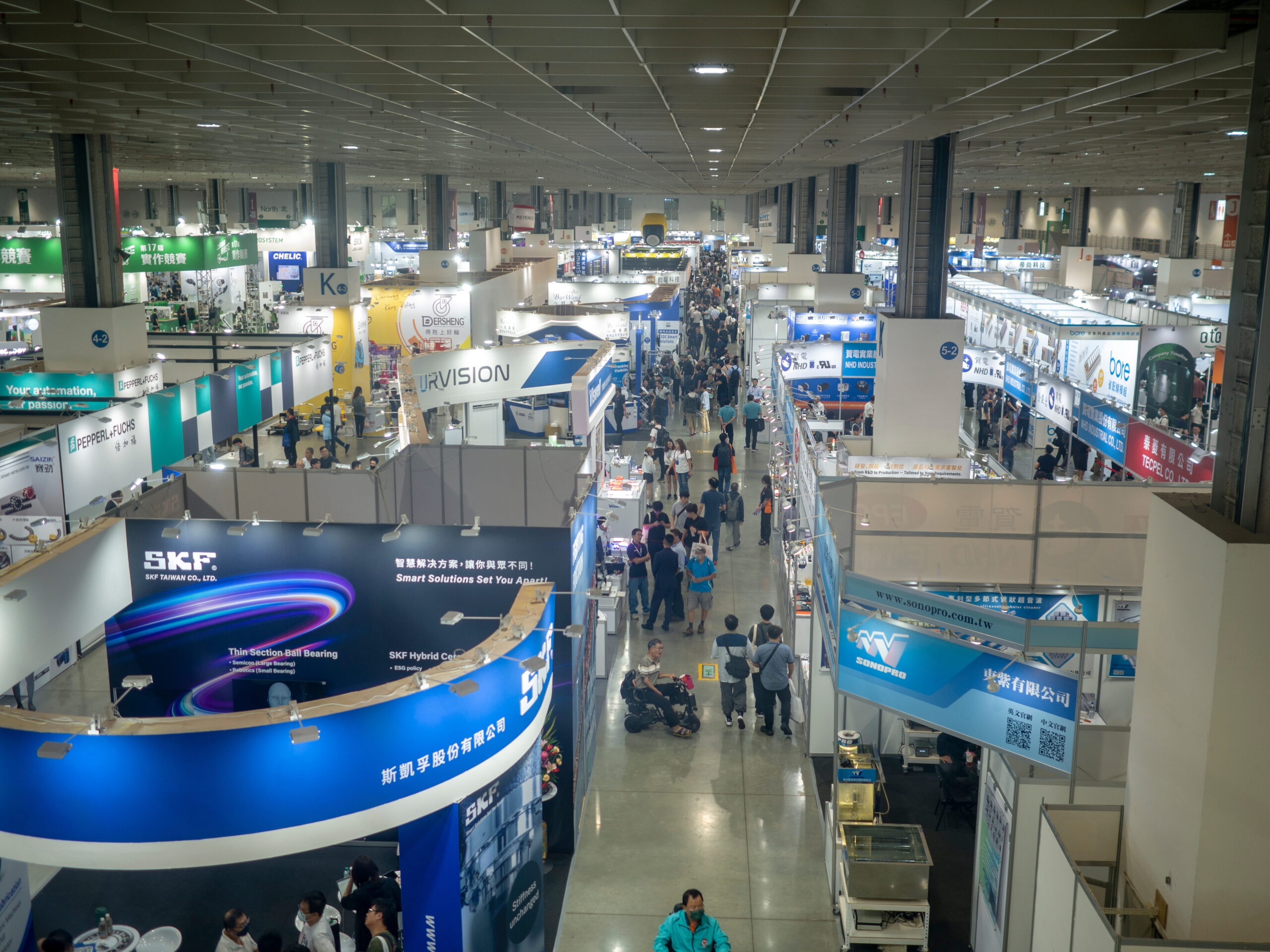
You’re walking between seminar rooms when a booth catches your eye. You give it a few seconds, decide whether you understand what the company does, then keep moving if you don’t.
That’s the reality at The Business Show Asia. The 2026 edition brought more than 8,000 attendees, 250 exhibitors and 150 expert speakers to Sands Expo & Convention Centre over two days, alongside speed networking and a packed programme of talks and masterclasses.
You already know how to build a two-minute business pitch. Your exhibition booth set-up needs the same discipline.
Why Your Booth Needs to Work Like a Pitch, Not a Display
A good pitch has a hook, a clear value proposition, a demonstration, and a close. Your booth faces the same challenge, except you have to deliver that message again and again to a new person every few minutes.
So don’t design your booth around what simply looks impressive. Give every part a job. Your signage should create the hook. Your main message should explain your value. Your demo should prove it. Your meeting area should make the next conversation easy.
The Hook: Getting Someone to Stop Walking
Your booth needs to work before your team says a word. Use height, contrast, and clear signage to make your brand easy to spot across a busy hall. Keep your main message high enough to see above people and simple enough to understand quickly.
An open entrance also helps. If visitors have to walk through a narrow opening or past a counter before they can speak to you, you’ve created an extra barrier.
Think about traffic peaks, too. Attendees often move between sessions in groups, so your booth needs to make an impact when that wave of traffic arrives.
The Value Proposition: What You Do in the Time It Takes to Read a Sign
If someone needs a full paragraph to understand what you offer, you’ve already lost valuable time. Reduce your main message to one clear idea. Avoid phrases like “innovative solutions” or “your trusted business partner” unless you explain what that actually means. With 250 exhibitors around you, generic business language quickly blends into the background.
A simple message hierarchy works better:
- Headline: What you do
- Subline: Who you help or what problem you solve
- Proof point: A result, feature, or reason to believe you
That gives visitors enough information to decide whether they should stop.
The Demo: Showing, Not Just Telling
If you’re selling SaaS, consulting tools, or digital services, let people see what your product can do. Build tablet kiosks, screens, QR-code touchpoints, and digital sign-in into the booth rather than adding them as an afterthought. Your lead capture should feel like part of the conversation, not another task your staff has to remember.
Place screens where visitors can see them without blocking your team. If a demo needs to run throughout the show, plan the power and connectivity properly for two full days.
The Close: Moving From Conversation to Commitment
Not every conversation needs a private meeting. Some do. A small meeting pod or semi-enclosed area gives serious prospects somewhere to sit when the discussion moves from a quick introduction to pricing, partnerships, or business needs.
Keep the front of your booth open and welcoming, then place the meeting area slightly further inside. Choose furniture that feels comfortable without taking up too much floor space, and consider simple acoustic solutions if you need more privacy.
The Follow-Up: What Happens After They Leave Your Booth
The conversation shouldn’t end when someone walks away.
Decide what you want each prospect to leave with. That might be a QR code, a scheduled call, a product guide, or a simple digital sign-up.
More importantly, connect that handoff to your lead-capture process. A two-minute conversation means little if your team can’t remember who the prospect was, what they wanted, or what should happen next.
Matching Your Pitch to Your Stage
Your booth size should match your business and what you need to achieve.
- Early-stage startup: Choose a compact stand with strong signage and one or two focused touchpoints. You don’t need a huge build to explain a good idea.
- Growing SaaS or service business: Add demo stations, screens, and space for active conversations. Your booth should let visitors experience your product, not just hear about it.
- Established SME or sponsor: A larger build can include meeting pods, stronger branding, and stage-adjacent visibility where the layout allows it.
Designing for Two Full Days, Not Just Opening Morning
Your booth needs to survive more than the opening rush. Choose durable materials and finishes that can handle continuous use. Give your team enough storage for brochures, bags, and personal items so the counter doesn’t become cluttered.
Staff comfort matters, too. If your team has nowhere to sit, store supplies, or take a short break, the quality of your conversations can drop by day two.
What to Look for in a Booth Partner Before You Sign the Contract
A services and entrepreneurship show needs a different approach from a product-heavy trade show. Your booth has to support conversations, demonstrations and meetings rather than simply display products.
Ask your builder about lead times, especially if you’re booking later in the cycle. Your budget will also affect the level of customisation, materials, lighting, screens and meeting areas you can include.
Check the organiser’s stand rules early, too. The 2026 Business Show Asia regulations cover matters such as venue access, lifting operations and safety requirements, while the exhibitor FAQs outline delivery and electrical arrangements.
Finally, ask how much of the build you can reuse. If you’ll return for another edition, a booth designed for adaptation can make more sense than starting from zero each time.
A Booth Is a Pitch You Give All Day Long
You already know how to build a two-minute pitch. Now apply that same thinking to the space around you.
Start with the hook. Make your value clear. Show what you can do. Give serious prospects somewhere to talk. Then make the follow-up simple.
At Gen Art Asia, we design and build exhibition booths around how you actually need to use them. If you’re exhibiting at Business Show Asia, let’s talk about how your booth can support the pitch your team has already spent time perfecting.
FAQs
How much does a custom booth cost for The Business Show Asia?
It depends on your booth size, materials, graphics, lighting, furniture, technology, and installation needs. A custom booth can also cost more if you need meeting areas or integrated screens.
How far in advance should I book my booth build?
As early as possible. Early planning gives you more time to finalise the design, confirm venue requirements, and arrange materials, graphics and equipment.
What’s the difference between a shell scheme and a custom booth for this kind of show?
A shell scheme gives you a standard exhibition structure with limited customisation. A custom booth lets you control the layout, branding, meeting areas, and visitor experience.
Do I really need a meeting pod, or is an open booth enough?
It depends on your sales process. If you regularly discuss pricing, partnerships, or sensitive business details, a small meeting area can make those conversations easier.
What makes booth design different for a speed-networking-format show versus a typical trade show?
Speed networking creates short, focused interactions. Your booth needs to communicate your value quickly and make it easy for visitors to move from a first introduction into a deeper conversation.
Do you offer storage for booth components between exhibitions?
If you participate in exhibitions regularly, storage can be a practical option between events. Gen Art Asia can help handle the storage of booth components and materials when required, so you have a convenient solution between exhibitions.
